May 30, 2024
Exploring the Inclusive Nature of Horticultural Therapy
The days are longer, the grass is greener, and at Craig Hospital, patients are spending more time outdoors as they work with plants in the hospital’s therapy gardens. Since 1982, Craig has offered horticultural therapy through its donor-supported Therapeutic Recreation Program for spinal cord and brain injury inpatients and outpatients. Equipped with the knowledge of adaptive tools and techniques, horticultural therapists teach patients and families that gardening is an accessible activity that welcomes hobbyists and novices alike.
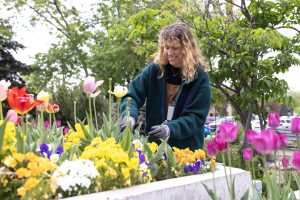
Mattie Cryer joined Craig in 2023 as a horticultural therapist after hearing about the opportunity from her professors at the Horticultural Therapy Institute. A social worker by trade, Mattie was exposed to plants’ healing nature during the lockdowns of the COVID-19 pandemic when she spent time gardening at her parents’ home.
“It’s been so fun working with patients individually as well as in groups,” Mattie says. “People really respond to the opportunity to be around other plant people and share the common interest of growing plants and caring for something.”
Mattie sheds light on the adaptive tools and techniques employed to make gardening accessible to individuals with disabilities, highlighting the inclusive nature of horticultural therapy. “We use a lot of grip modification,” she explains. “And then for our outdoor tools, we use extensions.” Her commitment to inclusivity extends to community involvement, as she invites caregivers and families to partake in the therapeutic journey alongside patients. “Family is absolutely invited to come support their loved one in the process,” she emphasizes.
In addition to outdoor gardens, Craig Hospital also has an indoor gardening room that is home to house plants, similar to a greenhouse. In the spring and summer, it’s where patients start seeds for the garden. The garden room is also where Mattie has many of her sessions with patients like Kent whose home in Minnesota has a plot of gardens and an orchard he maintains around his five-acre property.
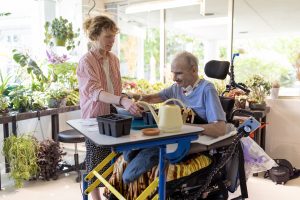
“I’m glad that Mattie does this; my whole life has been changed because of an accident and this is something to reconnect to an important part of me, to my life prior to the accident,” Kent says.
Horticultural therapy offers patients the opportunity to change an environmental setting which in turn can lend to a change or shift in perspective. While neurorehabilitation is often a difficult journey for patients, horticultural therapy serves as a respite; patients are distracted from pain, and working on goals doesn’t feel like work. “There’s scientific evidence that plants are calming to the nervous system and lower cortisol and blood pressure,” Mattie says.
For those who are looking to begin their horticultural projects this spring, Mattie encourages people to start with a pot and fill it with herbs or a houseplant. “The desire to connect with nature is so ingrained in communal DNA,” Mattie says. “Even if people don’t necessarily have an inclination toward gardening, as soon as they interact with plants or being outside or in the garden, there just seems to be this visible sigh of relief.”
Mattie also invites patients, caregivers and Craig grads to join Craig’s new Garden Club on Thursdays from 9-11 a.m. during the warmer months. You can view more details in the flyer here. This weekly two-hour club is designed for drop-in gardening sessions, whether accompanied by a therapist or during a free hour. Garden Club is designed to provide space to work on therapy goals in a garden setting, learn more about gardening with adaptive tools, or just spend time outside making the Craig Hospital North Garden a more beautiful space. Mattie will be present to designate tasks and assist with gardening/tools.
More adaptive gardening resources and tips:
Keep reading
October 7, 2026
A Second Chance at Life
September 22, 2026
A Legacy of Giving: Steve Baker’s Positive Impact on Craig Hospital
September 8, 2026
A Long Ride Back: Grit, Gratitude and Craig Hospital