July 27, 2026
The Michael Hassett Joyful Sound Scholarship: Helping Others Reclaim Their Voice
When Michael Hassett found Craig Hospital’s Aphasia Therapy Program (CHAT), he found more than therapy. He found a path back to connection, independence and the people he loved.
Aphasia is a language disorder caused by damage to the brain, often after a stroke or traumatic brain injury. It can make it difficult to speak, understand, read, write or find the right words, even though a person’s intelligence remains intact. Through CHAT, patients work to strengthen communication, build confidence and reconnect more fully with loved ones and daily life.
Sadly, Michael passed in April 2026 at the age of 42, after a 12-year battle with heart failure. For Michael’s friends and family, creating the memorial Michael Hassett Joyful Sound Scholarship was a way to honor his life by supporting a program that reflected who he was and what mattered deeply to him.
“When you seek to honor someone’s life, you look for something that reflects who they were and what made the greatest impact on their life,” explains Michael’s sister, Megan Young. “For our family, the CHAT program represents both.”
Holding Onto the Possibility of Progress
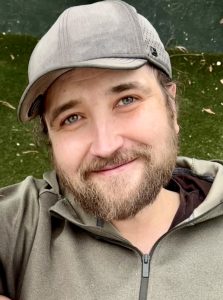
In 2017, at age 33, Michael experienced a life-altering stroke that left him with severe aphasia. At first, he could only speak three words.
Michael was told he had approximately six months to regain his speech before further recovery would be unlikely. The road that followed was slow, frustrating and painful. Six months passed quickly, but Michael never accepted that his progress had to end. He remained determined that he could continue to improve.
For three years, Michael held onto the belief that someone, somewhere, could help him.
In 2020, he found that help through the CHAT program at Craig Hospital.
The program became his lifeline back to the world. Through CHAT, Michael began rebuilding more than his ability to communicate. He regained confidence, independence and the ability to meaningfully connect with the people around him.
“CHAT helped him find his voice again,” his sister explains. “And, in many ways, it helped him find himself.”
Understanding the Impact of Aphasia
The effects of aphasia extend far beyond the loss of speech.
Before his stroke, Michael was an architect, an award-winning artist and one of the most charismatic people you could ever meet. Afterward, he could no longer say his own name, FaceTime his nieces or call 911 during an emergency.
Aphasia impacted Michael’s work, relationships, confidence, independence and sense of identity. The anxiety, depression and isolation that can accompany the condition are profound, yet often misunderstood or underestimated.
“It was only after my brother’s stroke that I realized how much of our everyday lives we take for granted,” his sister says. “Michael was incredibly intelligent, and his quick-witted sense of humor was unmatched—no matter how hard I tried to keep up with him.”
She remembers sitting with Michael at a restaurant and seeing how relieved he was when he realized the tablecloth was made of paper. He could draw pictures to help communicate what was on his mind.
“For years, I watched him struggle while putting forth an extraordinary amount of effort to improve,” she recalls. “More than anything, he wanted people to understand that he was still the same person inside. He was still intelligent, funny and full of personality—he simply could not express it in the way he once had.”
A Program That Restored Connection
For Michael, CHAT offered a level of specialized therapy that helped him move forward when he needed it most.
Over time, he began reconnecting with the people he loved in ways that once felt out of reach. One moment stands out most for his family.

“Four years after his stroke, I was his first phone call,” his sister says. “He called to wish me a happy birthday, a moment I’ll never forget.”
For Michael’s family, that phone call represented the power of communication, the importance of access to specialized care and the lasting impact of Craig’s CHAT program.
“We are forever indebted to the CHAT program at Craig and the treatment he received,” his sister says.
Why Scholarships Matter
After his stroke, Michael could no longer work and experienced significant financial hardship. He was fortunate to receive financial assistance each time he participated in CHAT, but the remaining costs were still challenging for him and his family.
The Michael Hassett Joyful Sound Scholarship was created to provide full-ride scholarships for individuals who need this life-changing therapy but may not otherwise have access to a program of this caliber.
Michael’s friends and family understand firsthand that the effects of a stroke or other serious medical events extend far beyond the individual. Loved ones often become caregivers, medical expenses accumulate quickly, and financial resources can be depleted.
“Seeing my friend progress from three words to full conversations again, rich with expression and humor, was incredible,” David Augustine, a close friend, says. “He became so much more of himself again thanks to CHAT. So excited to have the opportunity to facilitate access to this extraordinary program.”
Providing a full-ride scholarship helps remove financial barriers for families already carrying so much. It honors what every person deserves: access to high-quality treatment without forcing families to make impossible sacrifices.
Honoring Michael’s Generous Spirit
“Michael is one of CHAT’s defining success stories,” Katie Cassady, a Craig speech pathologist, says. “He was creative, funny, effortlessly cool and deeply determined. He had a way of connecting with people, even before he had the words.”
“His family’s extraordinary generosity will open that same door for so many others. We are deeply grateful that we can honor his creative, gifted and warm spirit and that a part of his wide-reaching legacy will be to continue to help people rediscover their voice,” says Kim Frey, Craig’s Director of Speech-Language Pathology and CHAT program founder.
His family believes he would want to help as many people as possible while removing the financial obstacles that might stand between someone with aphasia and the opportunity to reclaim their voice.
Being able to communicate, say your own name, call your mother by hers, or reach 911 during an emergency should never feel like a luxury.
“It will be my life’s mission to help ensure that other deserving patients have the opportunity to make that same call,” his sister says. “To reconnect with the people they love through access to this life-changing program.”
The scholarship has been made possible by one of Michael’s longtime friends, David Augustine, and the Augustine Giving Fund. Applications will open in October 2026.
Keep reading
September 22, 2026
A Legacy of Giving: Steve Baker’s Positive Impact on Craig Hospital
September 8, 2026
A Long Ride Back: Grit, Gratitude and Craig Hospital
August 28, 2026
Miles and Milestones: Ben Edwards Navigates His College Journey