November 1, 2023
An Unexpected Job: Caregiving for Loved Ones
“I never expected to be a caregiver for my 42-year-old son, Drew, but then again, he never expected this life either,” Dana McLaren explains. “Being Drew’s caregiver is now my job—and the payoff will be improved quality of life for him. So I do not feel sorry for myself. Instead, I have come to think of myself as Drew’s personal assistant.”
A New Chapter
It was October 2020 when Drew Current sustained a stroke—caused by high blood pressure—and was rushed to the hospital near his home in Chicago. After emergency surgery and a 10-day coma, Drew woke up with right side paralysis and severe aphasia.
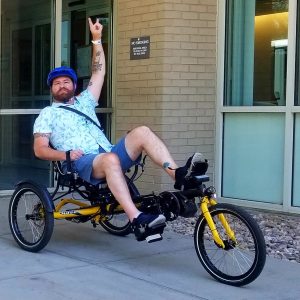
“This all happened in the middle of Covid, so I didn’t get to see Drew in person until six months after the stroke,” Dana says. “Looking back, it was such a difficult time. Drew’s life took a complete 180 as he struggled to manage a new normal. Not only was he trying to navigate a Covid lockdown, but he was living in a third floor condo with no elevator and attempting to go to outpatient therapy every day.”
By the beginning of 2022, Drew decided it was best to leave Chicago and move in with Dana in Colorado Springs.
“While it’s extremely difficult for a grown man to be in need of his mother’s care, Drew and I made the most of it. We’ve always been very close—so that helps a lot,” Dana says. “My daughter, Leah, also lives in Colorado, so she, too, has been an integral part of Drew’s care. They have a very strong sibling bond, and she’s always there for Drew in any capacity he needs.”
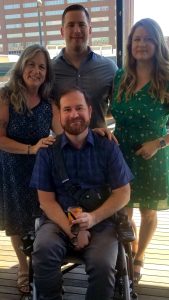
Fast forward nearly two years and Drew is participating in outpatient therapy at Craig and living in the hospital’s Patient/Family Housing. He gets around via a power wheelchair and is determined to become fully independent some day.
Well aware that caregiver burnout is real, 66-year-old Dana works hard to get through the challenging times. She tries to walk several miles each day and makes it a priority to see friends.
“And when I need it, sitting down to cry makes me feel better,” she says. “Craig’s goal is to help every patient become independent and self-sufficient, so we both look forward to that happening for Drew.”
Providing Care
More than 50 million Americans currently provide care for a chronically ill, disabled, injured or aged loved one. And this number continues to grow as the population ages. Not only do caregivers assist with numerous daily activities, such as eating, bathing and dressing, but they also pay bills, shop and provide transportation as well as offer emotional support and help with managing a disability or disease.
While caregiving can bring immense satisfaction and strengthen relationships, taking care of others also tends to affect a caregiver’s ability to work, engage in social interactions, build relationships, and maintain strong physical and mental health.
As a result, stress, depression and burnout (a state of emotional, physical or mental exhaustion) are very common. In fact, studies show that between 40% and 70% of caregivers have significant symptoms of depression. Common caregiving struggles include the following:
— Frustration and resentment that one’s world has been turned upside down
— Exhaustion from delivering continuous care
— Conflicting demands on a caregiver’s time and resources
— Guilt over not being able to do more to help loved ones
— Stress over managing medications, doctor appointments and medical bills
— Inability to relax and enjoy downtime and hobbies
— Feeling isolated from friends, family and colleagues
— Financial anxieties
— Feeling overworked
— Heath issues caused by stress, including headaches, gastrointestinal issues, muscle pain, obesity and hypertension
According to Kathy Hulse, LCSW, CCM, a clinical care manager at Craig Hospital, it is vital for caregivers to take care of themselves. Based on feedback from working with families for more than 30 years, Kathy offers the following advice for caregivers:
— Take some time for yourself and don’t neglect your health care needs.
— Find someone to talk to.
— Seek out caregiver support groups, either in-person or online.
— Try to get out of the house as much as possible.
— Ask for help and accept help.
In addition, the Caregiver Action Network provides the following advice for caregivers to avoid burnout:
— Seek support from other caregivers and remember that you are not alone.
— Take care of your own health so you can be strong enough to take care of your loved one.
— Suggest specific things that people can do to help you.
— Learn how to communicate effectively with doctors.
— Take frequent respite breaks.
— Watch for signs of depression and do not delay getting professional help.
— Be open to new technologies that can help you care for your loved one.
— Organize medical information so it is up to date and easy to find.
— Ensure all legal documents are in order.
A Father’s Role
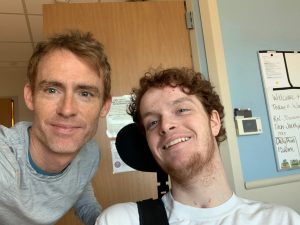
In March 2023, 18-year-old Owen Markham was involved in a ski accident in Colorado. A freshman at the University of Colorado Boulder at the time, Owen sustained a brain injury and was rushed to the hospital in Boulder.
Owen’s parents—Jamie, a law professor at the University of North Carolina at Chapel Hill, and Cara, a doctor at Duke University—left their three younger sons with their grandmother in North Carolina and immediately flew to Colorado.
Owen was unconscious for one month before waking up in mid-April. Shortly after, he transferred to Craig, where he stayed for the next four months for brain injury rehabilitation.
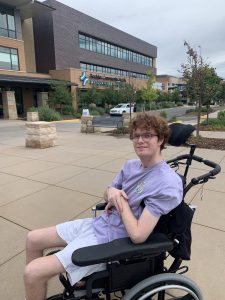
“I lived in family housing while Owen’s brothers were back in North Carolina with family,” Jamie recalls. “Thankfully, my job is flexible and we had a lot of support, which made life much easier while I was across the country with Owen.”
He adds, “Family, friends and neighbors all chipped in to help. There were so many people indirectly caring for Owen behind the scenes. Colleagues supported me at work, nieces and nephews helped care for my ill father so my mother could be with Owen’s brothers, and neighbors drove the boys to soccer practice and Boy Scouts. In addition, the Craig Foundation provided family housing near the hospital, as well as home modifications and plane tickets to travel back and forth between North Carolina and Colorado.”
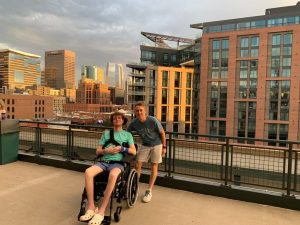
With Owen back at home since late August, Jamie is currently juggling the care of his sons and working. “It’s so good to have Owen back at home because we didn’t even know if he would wake up at all. He is slowly getting better, but still needs full assistance with all daily skills.”
To relieve stress, Jamie gets up early before the boys wake up to run. “And being back at work is a very nice diversion, so I can focus on life outside of caregiving,” he says.
Far From Home
Caregiving also has become part of Marylyn Scheuer’s life. Last summer, Marylyn and her husband, Eliot, drove from their home in Milwaukee to Colorado to attend a family wedding. After the wedding, the couple camped and hiked near Rocky Mountain National Park.
On July 1, 2023, Eliot and Marylyn were hiking when Eliot slipped and fell 50 feet. Alone on the trail with no cell service for miles, Marylyn ran to find help. After an extremely challenging three-hour rescue, Eliot was rushed to the hospital via helicopter.
In addition to a brain injury and facial fractures, Eliot broke fourteen ribs and multiple other bones, including his C1 vertebrae, while sustaining a spinal cord injury from his broken T3-T5 vertebrae.
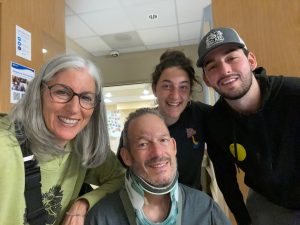 Following three-and-a-half weeks in the ICU, Eliot moved to inpatient therapy at Craig, where he stayed for five weeks, while Marylyn lived nearby in Craig’s family housing. When Eliot moved to outpatient therapy for the next month, the couple lived together in family housing.
“Most people do not survive a 50-foot fall. Eliot’s recovery has been a miracle,” Marylyn explains. “Thankfully, we’ve felt deeply supported through this entire ordeal, never alone, even being so far from home. Instead, we feel people holding us tightly, which gives us strength, hope, and faith. The Jewish community in Milwaukee, as well as so many friends and family, has rallied around us with unwavering support. It has been a true gift.”
Through it all, Marylyn has tried to take care of herself, while also caring for Eliot.
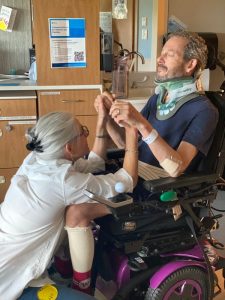
“I believe in G-d and the power of prayer, which has anchored me. And when I’m able, exercise and meditation really helps with stress,” she says. “And thanks to the Foundation, I was given a pass to Craig’s Wellness Center—and took advantage of massage therapy when I could. I also journaled to help process the magnitude of what was happening, and I was strengthened by all the prayers, cards, calls, and visits from family and friends.”
She adds, “Craig not only empowered me to be a caregiver, but the staff taught me the skills I needed to care for Eliot when we left the hospital. While there are many unknowns when it comes to going home, I have faith that we will figure it out. Eliot and I are both excited to return to Milwaukee to continue his recovery and get back to a more ‘normal’ life.”
According to Marylyn, Eliot’s healing will take many months, if not years, and she believes her most important role at this point is to take care of him.
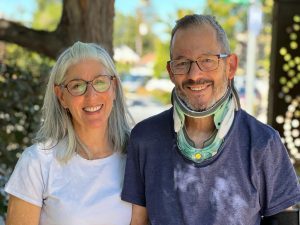
“He’s alive—and it’s a privilege and blessing to be his caregiver and advocate,” she says. “I can’t imagine how hard it must be for people who don’t have a loved one to lean on. Over the last few months, we have seen Craig make miracles happen. This hospital brings people back to life, and Eliot and I feel so grateful for the progress he has made, thanks to the excellent care of his dedicated therapists, doctors, nurses, and staff.”
Keep reading
October 7, 2026
A Second Chance at Life
September 22, 2026
A Legacy of Giving: Steve Baker’s Positive Impact on Craig Hospital
September 8, 2026
A Long Ride Back: Grit, Gratitude and Craig Hospital