February 17, 2026
Assessing Family Caregiver Readiness
More than 65 million (or 29 percent of the adult population) serve as family caregivers for an ill or disabled relative, according to the National Alliance for Caregiving. And this number will continue to rise with two-thirds of the U.S. public expecting to be caregivers in the future.
Many caregivers believe taking care of family members not only strengthens their relationships and brings immense personal satisfaction but also provides individuals with a strong sense of purpose and an opportunity to give back.
However, abrupt changes in family roles and responsibilities often result in economic strain, disruptions within work and the family, and high rates of distress. And this is especially true for family members who are the primary support for individuals following inpatient rehabilitation for brain injury.
As a result, Stephanie Agtarap, Ph.D., research scientist at Craig Hospital, developed the donor-supported study Assessing Family Caregiver Readiness for Moderate-Severe TBI During Inpatient Rehabilitation to assess caregiver readiness at discharge from inpatient rehabilitation and to predict future functioning and well-being in family caregivers of individuals with moderate to severe brain injury.
Research Objectives
In 2020, Craig Rehabilitation Nurses Barbara Lutz and Michelle Camicia developed The Preparedness for the Transition Home (PATH-25), a screening tool to address gaps identified by rehabilitation nursing for family members about to take on caregiving responsibilities prior to discharge from inpatient rehabilitation.
A unique aspect of the 25-item screener is that it includes a range of social and environmental factors related to the caregiver, such as their commitment to caregiving, long-term understanding of their loved one’s prognosis, social and environmental support, previous caregiving experience, pre-existing health problems, formal and informal resources, financial resources, and home and transportation accessibility.
“Craig Hospital’s clinical care management (CCM) team already does a fantastic job understanding these factors as part of comprehensive care, but attention to these factors is not the same everywhere,” Dr. Agtarap explains. “My objective with this study was to test the PATH-25’s ability to be an accurate screening tool for caregivers’ needs and health outcomes after they’ve discharged. To do that, I compared the caregiver’s assessment of themselves with that of their CCM and their ability to predict later caregiver unmet needs, burden and health.”
Initially funded as a pilot project by the Craig Foundation in 2021, findings from this pilot helped Dr. Agtarap receive the NIDILRR Switzer Fellowship Award from 2023 to 2024, which provided her one year of direct support to extend work from the initial pilot study. This extension allowed Dr. Agtarap to increase the sample of caregiver-patient pairs, as well as conduct separate focus groups with caregivers and Craig CCMs to discuss facilitators and barriers to caregiver readiness.
“Just before their discharge home, we approached family members taking on the role of primary caregivers and asked them to complete the PATH-25,” Dr. Agtarap says. “Then we had their CCM complete the PATH-25 evaluating the caregiver. Follow-up interviews were conducted at three- and six-months post-discharge to ask about caregiving roles, responsibilities, social determinants of health, unmet needs, feelings of loss and caregiver strain, physical and mental health, and self-care strategies.”
She adds, “Several family members were gracious enough to follow up with us in a focus group, sharing their stories one year after their discharge from Craig. We also sat down with three CCMs to discuss what readiness meant for caregivers.”
A total of 54 patient-caregiver pairs were enrolled in the study and completed the PATH-25. The majority of caregivers were female (more than 79 percent) and a parent to the patient (more than 59 percent).
Interesting Outcomes
Results showed that surprisingly, there was little agreement between the caregiver vs. CCM ratings on the PATH-25. When it came to predicting outcomes, caregiver scores reliably predicted specific unmet needs three months later and health outcomes six months later. CCM scores, on the other hand, were better at predicting unmet needs six months later.
A theme that arose during focus groups was that caregivers experience a lack of social connection with others going through the same challenges, and many have a desire to connect with other caregivers. Additionally, common barriers include a lack of training and support when it comes to maintaining hospital equipment.
Caregivers emphasized the importance of gratitude and support and the need for ongoing training and resources for caregiving. Caregivers also highlighted the physical and emotional toll of caregiving, especially the psychological challenges during the recovery process and the importance of establishing new routines.
CCMs discussed the importance of family involvement, the challenges of managing expectations, and the unique support systems at Craig Hospital, such as financial assistance for home modifications and self-care resources for caregivers.
Barriers to caregiver readiness included managing family expectations, insurance constraints, and the variability of resources available post-discharge. CCMs also discussed the importance of an interdisciplinary approach, the need for non-judgmental care and cultural sensitivity, and respite care for caregivers.
“Overall, we found that the PATH-25 can be a helpful screening tool for caregivers prior to discharge,” Dr. Agtarap says. “In addition, the differences in PATH-25 scores between caregivers and their providers point to differences in perceived readiness, and these differences in perspective can be predictive of different outcomes at different times.”
She adds, “This tool can help aid caregivers in recognizing potential issues and concerns about the caregiving role and provoke anticipation and cues to action to begin addressing their concerns prior to discharge from inpatient rehabilitation.”
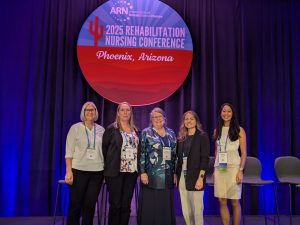
Dr. Agtarap presented this work with Dr. Michelle Camicia at the 2024 ACRM Conference, as well as with Dr. Barbara Lutz at the 2025 Association for Rehabilitation Nurses Conference this past summer.
For more information on supporting research at Craig Hospital, please visit: craighospital.org/foundation/donate.
Keep reading
October 7, 2026
A Second Chance at Life
September 22, 2026
A Legacy of Giving: Steve Baker’s Positive Impact on Craig Hospital
September 8, 2026
A Long Ride Back: Grit, Gratitude and Craig Hospital