March 15, 2024
New Sleep Testing Pilot Program for Craig Inpatients Promotes Health Equity
The American Medical Association estimates that 30 million people in the U.S. have sleep-disruptive breathing disorders, such as sleep apnea. Sleep apnea is significantly more common in individuals with spinal cord injury, especially those with tetraplegia, among whom an estimated 25% to 40% have the disorder. Individuals living with traumatic brain injury also see sleep disturbance following injury at rates between 30% to 70%. Moreover, the condition is highly underdiagnosed, which can lead to even more significant medical conditions down the road, such as heart attack and stroke.
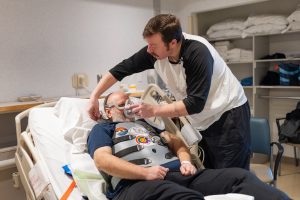
Individuals diagnosed with these disorders prior to an injury often see worsening of these conditions after a spinal cord or brain injury, most likely due to disfunction of throat muscles associated with brain injury, flaccid muscle tone, neuromuscular impairment, increased weight, or an impaired ability to cough and take deep breaths in patients with spinal cord injury. Polysomnography, also known as a sleep study, is a comprehensive test used to diagnose sleep disorders by recording brain waves, blood oxygen levels, heart rate, breathing as well as eye and leg movements during sleep. During the COVID-19 pandemic, many polysomnography sleep labs closed or limited their services, including those that Craig relied on for our patients’ sleep testing, leaving many of our patients without the testing needed to fully heal.
To help meet this need, Craig began a pilot program to promote health equity by ensuring individuals with diverse health conditions received proper and targeted care. Access to accurate diagnostic tools helps address health disparities, ensuring that individuals, regardless of their condition, have the opportunity for timely and appropriate interventions to improve their sleep health and overall wellbeing. Since October 2023, Craig’s respiratory therapy staff have implemented one of the only inpatient sleep testing programs for a rehabilitation setting in the country.
“Polysomnography studies are invaluable to our patient population,” says Justin Walter, Craig’s director of respiratory therapy. “Sleep testing offers access to equipment that enhances our patients’ sleep and ability to heal. We also find that our patients are better able to participate in therapy through the slow introduction to sleep interventions that we’re able to offer through this in-house program, ensuring more effective treatment outcomes.”
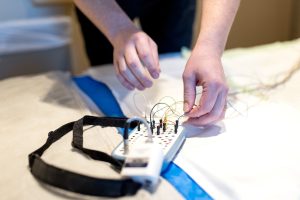
Craig plans to expand this program to outpatients in the future, as the majority of Craig’s respiratory therapy consults center around sleep-disordered breathing and many outpatient sleep study centers do not accept patients who need caregiver turns overnight, lifts for transfers and nocturnal medications.
“Growing and expanding this program will bring profound benefits to the communities we serve,” Justin says. “Our mission is to improve the overall health and wellbeing of individuals living with spinal cord and brain injury, and broadening access to this critical service is vital in the success of that objective.”
Keep reading
October 7, 2026
A Second Chance at Life
September 22, 2026
A Legacy of Giving: Steve Baker’s Positive Impact on Craig Hospital
September 8, 2026
A Long Ride Back: Grit, Gratitude and Craig Hospital