May 31, 2024
Back to Class: Alan Payne Focuses on Returning to Teaching After a Brain Injury
For many people, work is a significant part of their lives. In addition to earning an income, employment allows individuals to develop a sense of identity and pride, establishes important social connections, and increases self-esteem and independence.
For 45-year-old Alan Payne, teaching art at Annunciation Catholic School in Northeast Denver provided him with a sense of meaning and purpose. Not only did he find pleasure in providing for his family, but teaching art also meant helping young students find joy and creativity—something he loved.
It’s also a job that Alan is desperately trying to get back to since his life-altering accident more than two years ago.
An Unexpected Ride
After finishing work on Thursday, December 16, 2021, Alan, an experienced cyclist, was enjoying a ride on a warm winter afternoon when a truck suddenly turned in front of his bike, causing him to T-bone the truck.
He was rushed to a nearby Level 1 trauma center, where he was diagnosed with a diffuse axonal brain injury and placed in a medically induced coma.
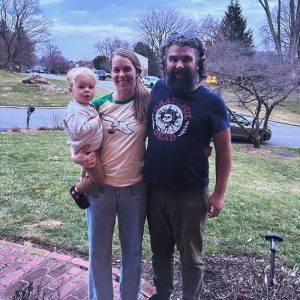
Shortly after, Alan was transferred to Craig Hospital for brain injury neurorehabilitation, where he spent the next three months surrounded by his wife, Meg, and his infant son, Silas, who was born just a few weeks after the accident.
“I knew Craig Hospital was the best place for Alan,” recalls Meg, a physical therapist who had worked at Craig back in 2013. “We both feel very blessed to live in a city with a world-renowned rehab hospital.”
While at Craig, Alan slowly began the recovery process. “I don’t remember most of my time at Craig,” Alan says. “I had no memory of the accident, and I couldn’t feed myself or shower on my own. I also had global aphasia and severe motor planning deficits. My days were spent in physical, occupational and speech therapy, trying to regain so many lost skills.”
In late March, Alan was discharged from inpatient and returned to Craig twice a week for outpatient therapy.
Striving for Independence
It was during Alan’s time in Craig’s outpatient program in October 2022 that he began working with Casey Pfister, an occupational therapy specialist with the donor-supported Community Reintegration program.
“Our main objective is to help patients return to productive, community-based activities, such as work or school,” Casey explains. “We concentrate on each patient’s unique objectives in order to achieve independence. Returning to work after an injury brings a sense of stability, meaning and enjoyment. In some cases, it’s a big piece of our identity, so helping patients return to that role is our main focus.”
She adds, “Depending on a patient’s specific needs and goals, our services include work readiness assessments, collaboration with employers, coaching and development, career planning, and community resource connection.”
While getting back to teaching on a full-time basis was Alan’s long-term goal, he knew he wasn’t ready. “I set a date of August 2025 as my target for getting back in the classroom full time,” he explains. “I still had many challenges, and I knew I had a lot of work to do before then. Casey helped me break down milestones to support timelines and progress for my long-term goal.”
Casey’s first step was to get Alan involved in volunteering to give him a sense of purpose and increase his productivity. She helped vet volunteer sites by assessing environments, duties, interests, current abilities and barriers. In addition, she connected him with a reliable, affordable transportation option.
Based on his interests and passions, she set up volunteering opportunities at Bikes Together—a nonprofit bike shop and community hub for equitable bike access and education—and in the art room at C3, a Denver elementary school.
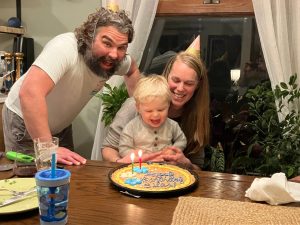
“Volunteering provided a great opportunity for Alan to build self-advocacy skills, practice collaboration and communication with his supervisors and co-workers, develop checklists and strategies to compensate for memory challenges, and improve independence,” Casey explains.
“At the same time, we worked together on goal mapping, role played scenarios that might take place in the workplace, and developed strategies to address Alan’s fatigue and limitations related to memory, planning and organization,” she says. “We also reinforced routines by using a day planner, reminders and alarms.”
Casey also met with Alan’s supervisors to discuss accommodations, performed on-site visits to analyze work demands, and observed Alan at work to help boost his performance.
“The goal was to help Alan incorporate strategies and establish routines in the context of volunteering and work,” Casey explains. “The beauty of our program is that it allows us to have more of an impact by going into the environment and making impactful changes.”
When Alan was ready, a part-time job was the next step. Prior to his accident, he worked at Molly’s Spirits, a large liquor store in Denver, so Casey reached out to his previous supervisor and arranged for Alan to return to Molly’s Spirits about 12 hours a week with accommodations.
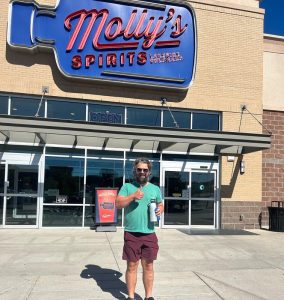
Casey also connected Alan with the Division of Vocational Rehabilitation and a benefits counselor, which was critical to Alan understanding how his work earnings impact benefits.
In addition to supporting Alan in his work at the liquor store, Casey is currently helping him boost his confidence and increase his responsibilities at C3, including teaching more art lessons in the classroom. “I benefit from practice and repetition, so I’m working on developing a lesson plan to teach print-making to first graders,” Alan explains. “And Casey plans to organize a rehearsal in front of Craig staff before I deliver the lesson to my students.”
He adds, “Casey has set me up for success, and I feel so grateful. She’s taught me how to advocate for myself, develop a problem-solving mindset, tolerate longer days, and get my confidence back. I am even driving again, which is something I never thought was possible. But thanks to the support of Natalie Uyeno [a driving rehabilitation specialist in Craig’s donor-supported Adaptive Driving Program], I am back on the road again and can independently drive myself and access the community.”
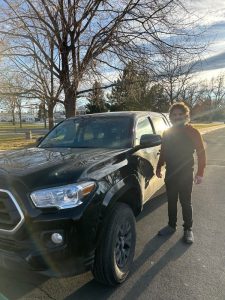
When Casey reflects on her time working with Alan since 2022, she can’t help but smile. “Alan is an amazing example of what’s possible after a brain injury. He works so hard and has the best attitude. People may not realize that a brain injury is forever. Alan will face challenges every day for the rest of his life, but through it all, he stays positive, is always open to feedback, and focuses on growth and self-improvement. He’s quite amazing and an inspiration to so many.”
To learn more or donate to help patients like Alan, please visit craighospital.org/donate.
Keep reading
October 7, 2026
A Second Chance at Life
September 22, 2026
A Legacy of Giving: Steve Baker’s Positive Impact on Craig Hospital
September 8, 2026
A Long Ride Back: Grit, Gratitude and Craig Hospital